
Home » AeroBarrier Airsealing System
Airtightness made simple
Airtightness is the missing driver of energy efficiency and build quality in New Zealand homes.
Globally, airtightness is an essential building code requirement. AeroBarrier makes airtightness simple and cost effective

AeroBarrier provides a simple, low-cost pathway to reliable airtightness. Used in over 200,000 homes across North America and Europe, it is proven technology that has been widely adopted by specifiers and builders in comparable markets.
Airtightness is achieved and verified during sealing, reducing complexity and risk compared to traditional methods.
There are three key drivers of energy efficiency in buildings: insulation, windows and airtightness.
In most developed markets, minimum airtightness levels (ACH) are regulated as a basic quality requirement.
While New Zealand has no mandatory standard, improving airtightness delivers significant benefits in comfort, energy efficiency, indoor air quality, moisture control and durability risks.
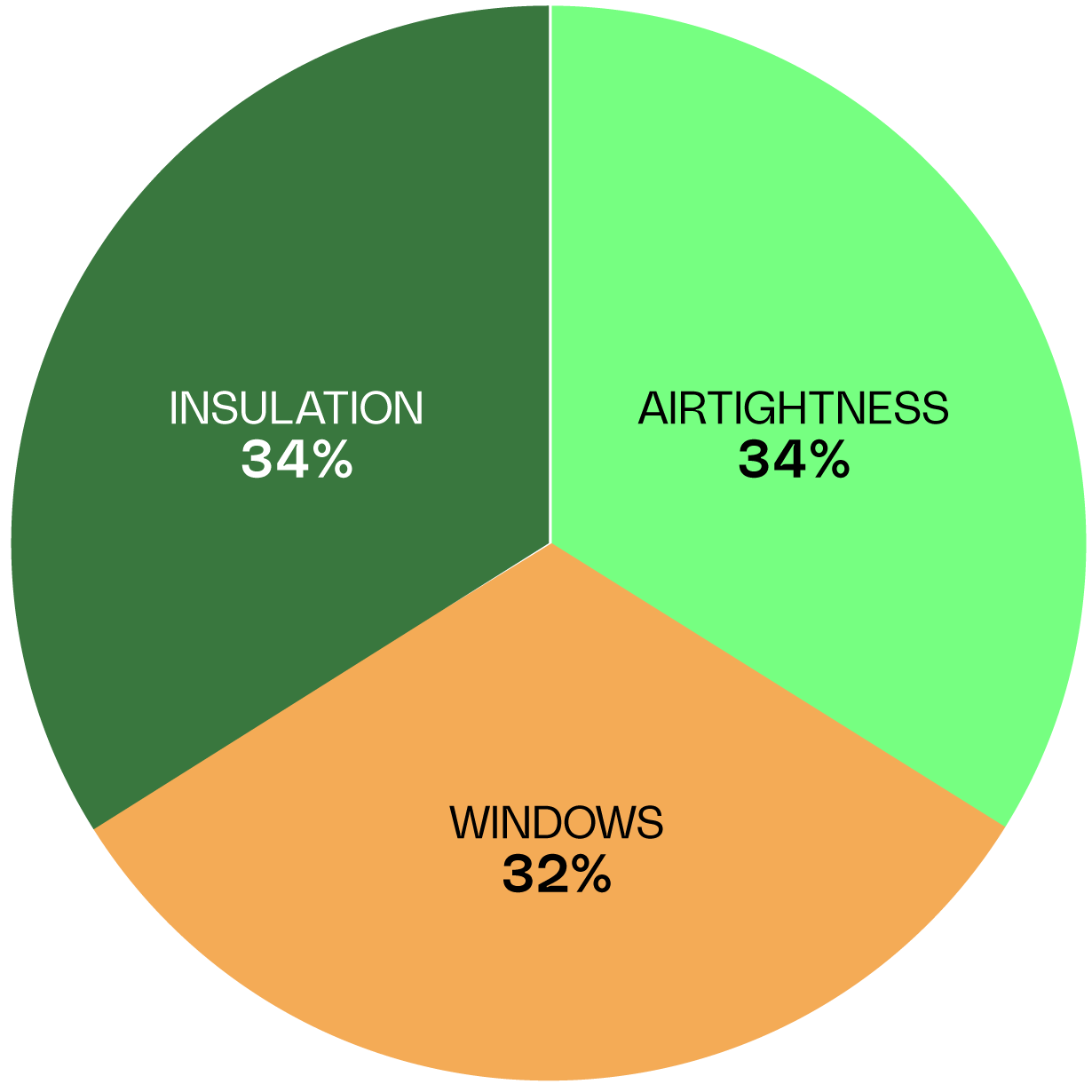
System % of impact

Air leakage accounts for between 25 percent and 40 percent of the energy used for heating and cooling in a typical residence.
“The International Energy Conservation Code recognises airtightness as a core pillar of energy efficiency—on par with insulation and windows—and regulates minimum air-leakage levels in most developed markets.
In New Zealand, airtightness remains largely unmanaged—making it one of the fastest, lowest-risk ways to unlock better energy, comfort, and durability outcomes.”


The data alongside is from BRANZ Bulletin 698 – Residential Mechanical Ventilation Systems.
BRANZ empirically assessed the impact of airtightness and H/R ventilation on energy efficiency.
Energy consumption was monitored in a test house across multiple airtightness levels, with and without ventilation (Study Report 698).
The results:
This study demonstrates how airtightness and ventilation work together to dramatically improve home performance.

Mechanical ventilation and airtightness are designed to work as a system—one simply doesn’t perform well without the other.
In a leaky home, air escapes through gaps—bypassing the ventilation system and wasting heating and cooling energy. In an airtight home, most air flows through the system, allowing it to filter air properly and recover heat efficiently. This means better air quality, lower energy use, and smaller, more effective systems.
Airtightness makes the whole home, work better.

AeroBarrier’s sealant is Ultra Low (UL) GREENGUARD Gold Certified — the most rigorous indoor air quality standard globally, covering environments like schools and hospitals.
A healthier build starts with what you put into it. AeroBarrier improves airtightness without introducing anything harmful to your home or the environment.

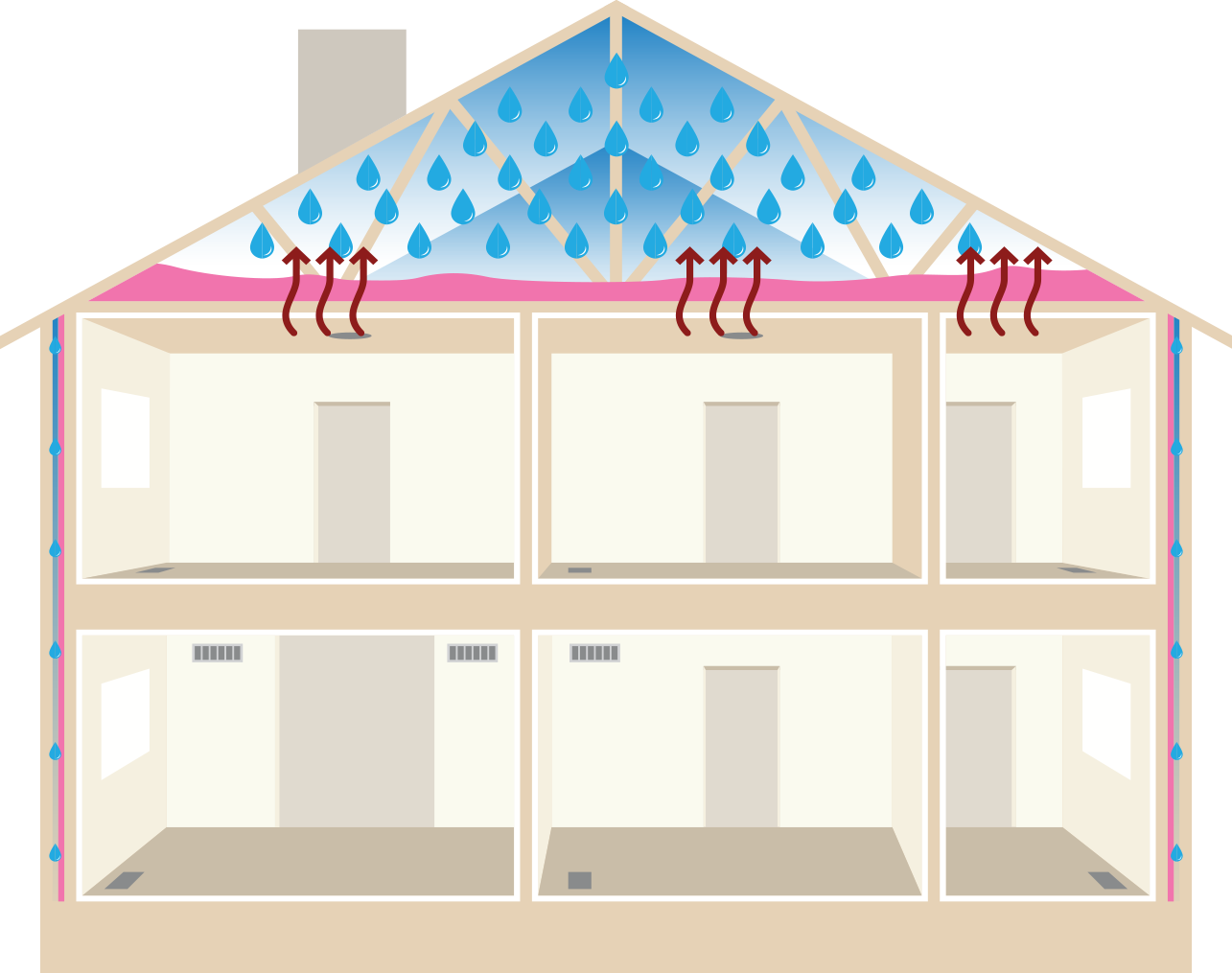
While water vapour can slowly move through materials like plasterboard (a process known as vapour diffusion), the real moisture risk in homes comes from uncontrolled air leakage. Research shows that air leaks can carry up to 90 times more moisture into wall cavities than vapour diffusion alone.
Even a small 2.5 cm gap in plasterboard can let 30 litres of moisture into a wall each month—especially in New Zealand’s humid climate. This excess moisture can condense inside the structure, leading to mould, mildew, and long-term damage.
AeroBarrier doesn’t block vapour diffusion—it seals the cracks and gaps that cause air leakage and moisture build-up. That means better indoor air quality, fewer health risks, and a longer-lasting home.
Reference: Building Science Corporation – RR-0412: Insulations, Sheathings and Vapour Retarders.
Air leakage will diminish the overall performance and effectiveness of fibrous insulation due to unintended air flow and condensation from high humidity in the wall cavity. Even brand-new insulation will not perform as it was designed if installed in an environment with air leakage. Less air leakage helps insulation perform as it should.
A study by the Fraunhofer Institute for Building Physics, in Stuttgart, showed that a leaky enclosure can decrease the insulation’s effectiveness by a factor of 4.8 – making a 500 sq ft (46m²) leaky building require the same amount of heating as a 2,400 sq ft (223m²) airtight building.

Airtight construction prevents moist air from entering wall cavities, keeping them dry and protected.
“To avoid spending significant amounts of time trying to find little leaks, it was going to be easier to use AeroBarrier.”
respond Architects
Even in brand-new homes, small gaps and cracks are common—and they add up. Research shows a typical new house has the equivalent of a 1.5 m² hole in the building envelope when all leakage paths are combined.
Surveys by CSIRO and ATTMA in Australia found the average airtightness of new homes to be around 8 ACH50, with Aero testing in New Zealand showing similar results.
BRANZ research shows that improving airtightness and ventilation can cut energy use by up to 90% (9 to 1ACH50), and more typically by around 50–70% when improved from about 8 to 2 ACH50 with heat-recovery ventilation.
|
Dwelling type
|
Av ACH50
|
Max ACH50
|
|---|---|---|
|
Single storey house
|
7
|
13
|
|
Two storey house
|
9
|
17
|
|
Average
|
8
|
15
|

Aero Ltd is New Zealand’s exclusive AeroBarrier provider, partnering with homeowners and the building industry to deliver verified airtightness and better-performing homes.
Improve energy efficiency, comfort, and durability, using proven technology and standard construction methods.
Enquire now to find an AeroBarrier installer near you.
Sign up to our newsletter
Book CPD presentation