
Airtightness is becoming one of the defining features of modern, energy-efficient homes, helping to create houses that are warmer in winter, cooler in summer, healthier to live in and far more cost-effective to run. Traditionally, achieving that level of performance has come with a premium price tag. But AeroBarrier is changing that.
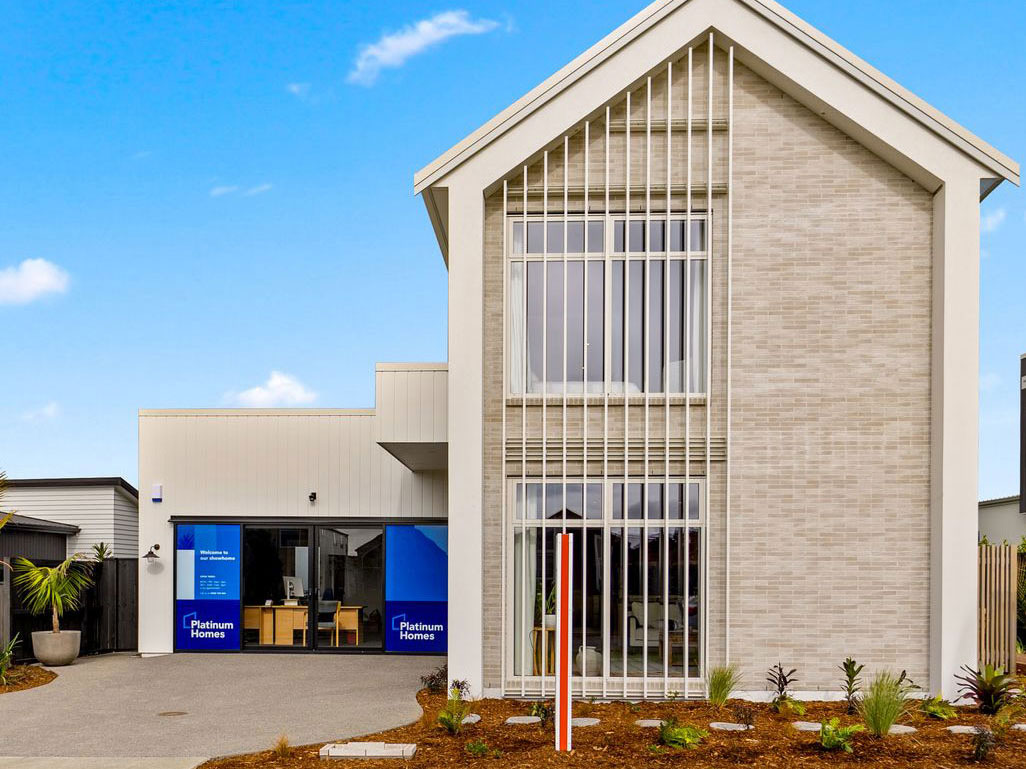
Platinum Homes’ Karaka showhome offers better performance for less – with AeroBarrier
A Smarter Approach to High Performance Homes
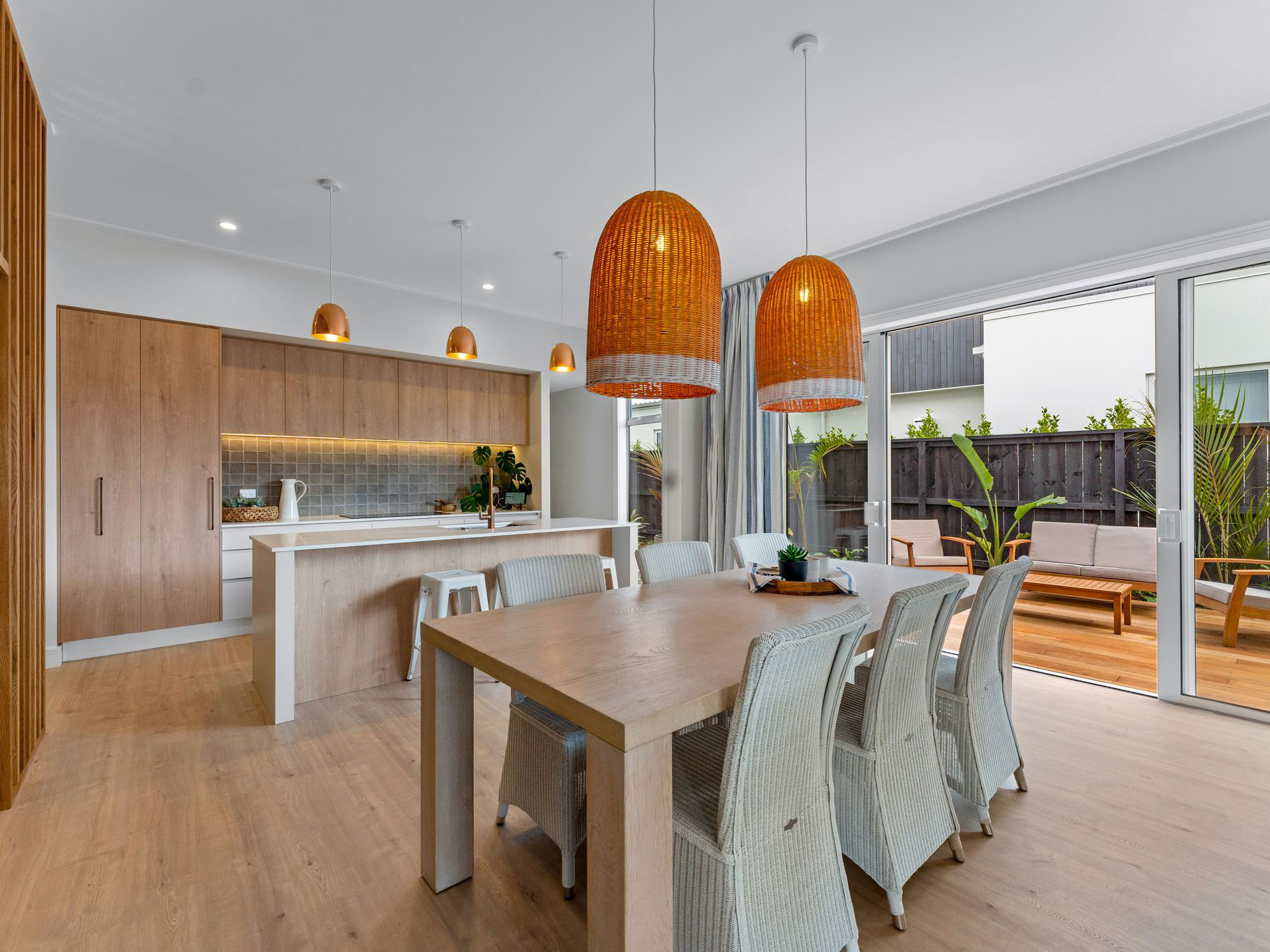
Platinum Homes’ Karaka showhome is more than just a modern home with sleek interior finishes. The company utilised AeroBarrier – a system designed to seal hidden air leaks throughout a home’s building envelope – to achieve an airtight building. Combined with premium insulation, advanced joinery and mechanical ventilation, this will help to minimise heat loss, improve comfort and reduce energy use. “Energy efficiency is top of people’s minds at the moment,” says Joann Bell, General Manager at Platinum Homes Auckland South. “That’s why we’re using AeroBarrier — it gets us to a higher performing home at a very achievable price.”
High performance houses are built to a higher standard than regular houses in terms of airtightness, insulation and energy-efficiency. After trialling the system in their Karaka showhome, the company is now preparing to launch a new energy-efficient home package designed to deliver many of the benefits of a passive-style home at a far more accessible cost. According to Joann, AeroBarrier is key in this. It will ensure excellent performance while saving homeowners a significant amount of money.
Measurable Performance and Energy-efficiency
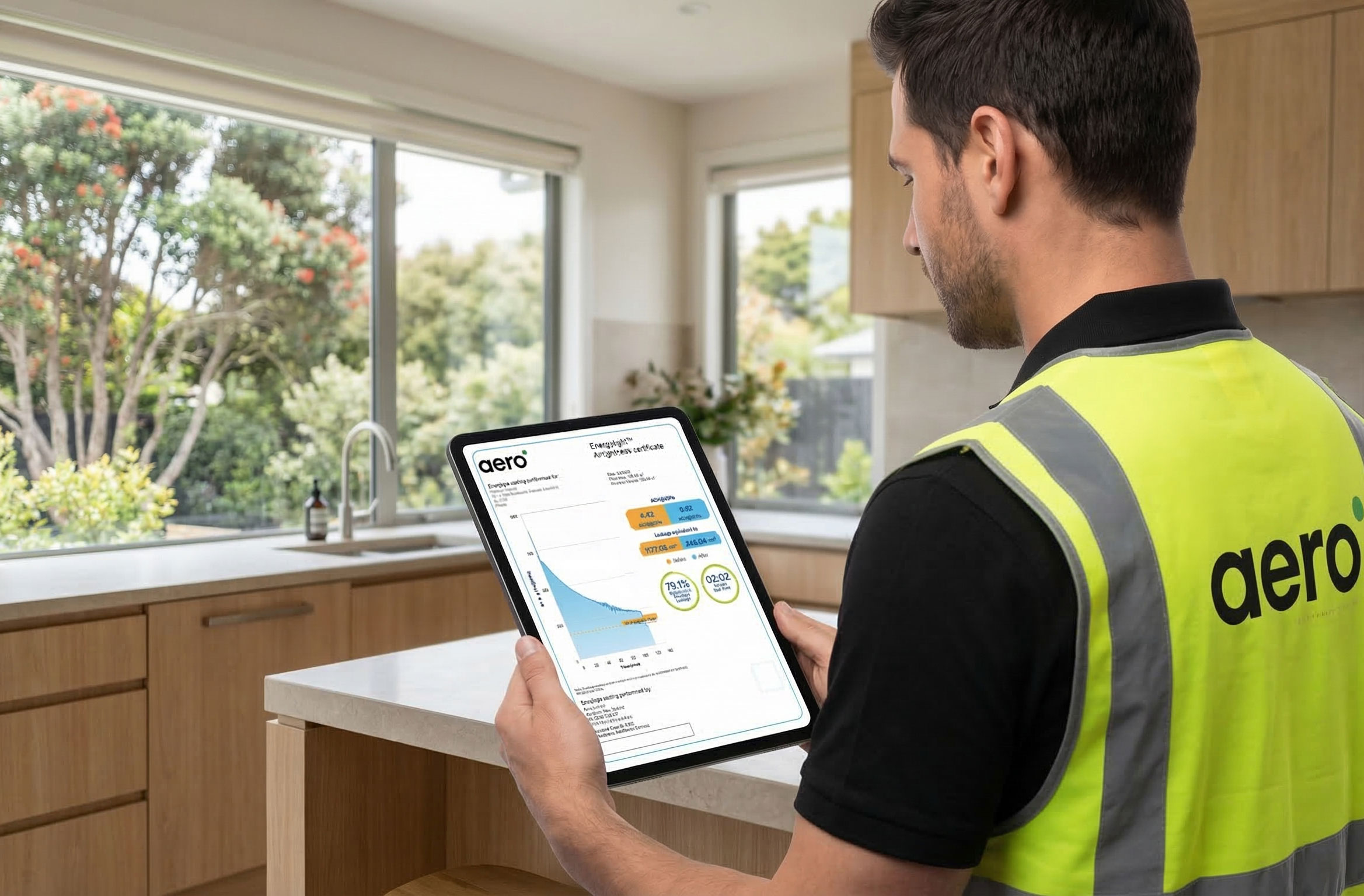
Unlike many hidden building features, airtightness can be measured and certified. Platinum Homes Auckland South are targeting an airtightness level of 3 ACH (air changes per hour) for their new package — a benchmark commonly used internationally for high performance homes. “In some countries overseas, 3 ACH is mandatory,” Joann says. For homeowners, the testing provides confidence that the home is genuinely performing as intended. “The results are real and measurable,” says Joann. “You get certification that your house is performing at the standard level.”
With airtightness, the lower the number, the better the performance. True ‘passive houses’ that are certified to a global standard will have to come in at 0.6 ACH or below. High performance houses are aiming for 3 ACH. In comparison, many older New Zealand homes perform significantly worse due to uncontrolled air leakage. These homes often have levels of close to 20 ACH, which indicates a comparatively cold and damp interior.
What Airtightness Actually Means
For some homeowners, the term ‘airtight’ can sound counterintuitive. People often associate it with stale, stuffy spaces. In reality, modern airtight homes are designed to provide fresh and clean air.
In older houses, air leaks through gaps around windows, framing, pipes and construction joints. These leaks allow draughts, moisture and outdoor contaminants inside, while letting heated or cooled air escape. By sealing those leaks – and creating an airtight envelope – homes become more thermally efficient and easier to ventilate properly.
Airtightness means controlling where and how air enters and leaves the home. It is used in combination with mechanical ventilation, such as an MVHR or comparable system. Fresh filtered air is continuously circulated throughout the house. The result is a home that feels consistently comfortable year-round.
Healthier Homes for Everyone
Health benefits are a key advantage of building an airtight home. A controlled indoor environment helps reduce condensation and moisture build up, lowering the risk of mould growth that many New Zealand homes are struggling with. In addition to keeping moisture and mould at bay, airtight homes keep contaminates such as pollen and irritants outside, making a significant difference to the health and wellbeing of their inhabitants.
“With airtightness and mechanical ventilation, you get better air quality and fresher, healthier air,” Joann explains. “It removes stale moist air, especially from bathrooms and kitchens.”
“AeroBarrier also changes the interior vibe of the house for the better,” she says. “It is much quieter and calmer. Having a sealed envelope like this creates a very calming and comfortable environment. People can feel the difference.”
“AeroBarrier is a very cost-effective way to achieve a much higher level of performance and comfort. The results speak for themselves compared to a typical home.”
JOANN BELL, GENERAL MANAGER AT PLATINUM HOMES AUCKLAND SOUTH
Simple and cost-effective to integrate
One of the key advantages for builders is how easily AeroBarrier fits into the construction process. “AeroBarrier was very straightforward to integrate into our standard build,” Joann says. “It didn’t require any changes to how we construct, and it had minimal impact on the programme.”
The process itself takes place toward the end of the build, after the home is enclosed. “It only took one day out of the build process,” she says. “The team was very reliable. They sorted it all out and there was no mess afterwards.” For Platinum Homes, the ability to improve building performance without fundamentally changing construction methods was a major factor. “Using AeroBarrier helps us deliver a more comfortable and energy efficient home without adding complexity,” Joann says. “It’s a smart upgrade we can offer clients, and we will be using it whenever we can.”
A Growing Shift in New Zealand Housing
As energy prices rise and homeowners become more conscious of comfort, health and sustainability, interest in better performing homes is expected to grow rapidly across New Zealand. And while the technology is beneficial across the country, Joann says the impact becomes even greater in colder climates. “It makes houses extremely energy efficient in Auckland, but if you add AeroBarrier in Dunedin or anywhere else in the South Island, you get an even bigger result.”
Importantly, the additional cost for airtightness is extremely low. “It’s a very cost-effective way to achieve a much higher level of performance and comfort,” Joann says. “The results speak for themselves compared to a typical home.” For Joann, the logic is simple. “Why wouldn’t you build the best house you could?”
“Why wouldn’t you build the best house you could?”
JOANN BELL, GENERAL MANAGER AT PLATINUM HOMES AUCKLAND SOUTH