Condensation Analysis:
15 years of building science showing why moisture control needs more than code compliance.
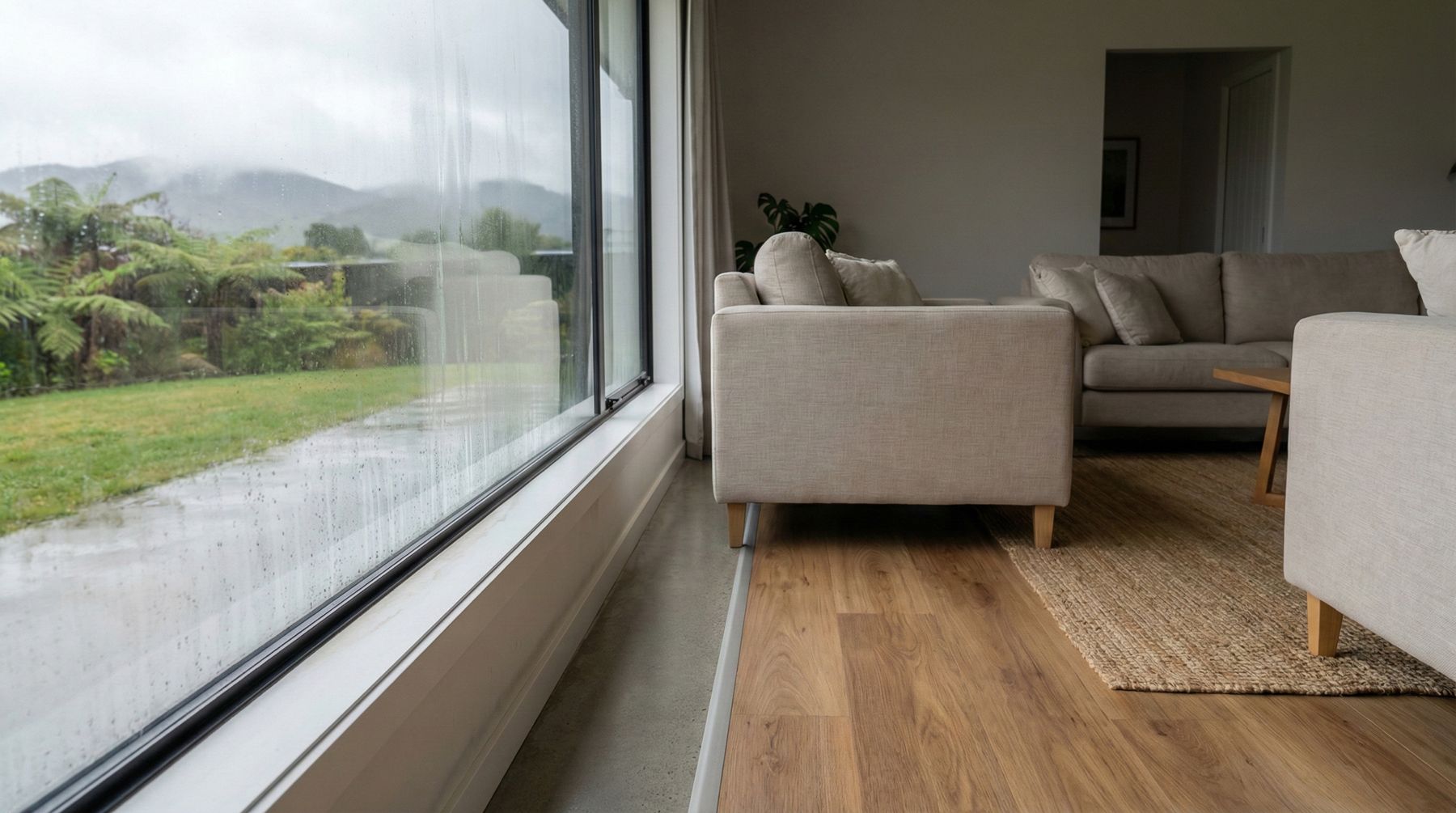
The Research Is Clear: Moisture Control Needs More Than Code Compliance
Across New Zealand, many homes meet official requirements yet still struggle with hidden dampness. The reason is simple. Condensation does not care about paperwork. It is the result of physics, materials science, and everyday living patterns.
When warm indoor air meets a cold surface inside a wall, ceiling, or roof build up, moisture forms. If this moisture cannot dry fast enough, it stays in the structure. Over time insulation becomes less effective, timber begins to decay, linings fail, and indoor air quality declines.
The code sets the minimum standard. Research from building scientists, including the team at BEO Science, as documented by Denise Martin in her Condensation Analysis article, shows that minimum standards do not always prevent long term moisture problems. If your goal is a building that stays healthy across decades, you need a deeper look at how heat and moisture actually move through the assembly.
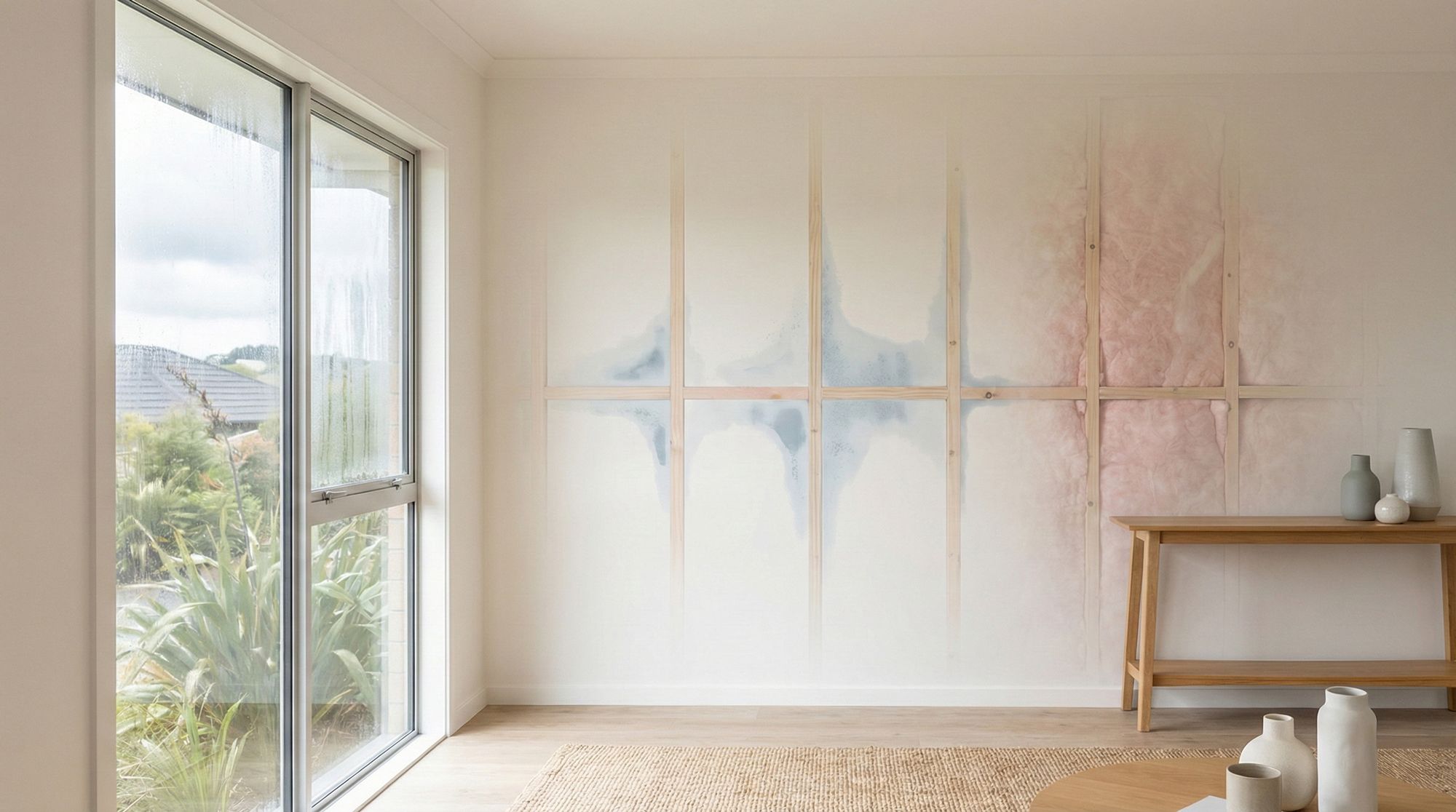
This image shows what happens behind the wall. Moisture can form inside the cavity while the finished surface still looks perfect. It highlights how unseen condensation can build up even in tidy, contemporary homes that meet code requirements.
Findings from 15 years of testing New Zealand homes
Denise’s article highlights the difference between compliance checks and real world performance. Her team has spent more than 15 years testing homes and analysing failures that only became visible once major damage had already occurred. Their findings show three consistent patterns.
- First, condensation often forms in places that are impossible to see during construction or later inspection. A room may feel dry while the wall behind it is slowly absorbing moisture each winter.
- Second, mould can grow even when surfaces technically meet basic thresholds. Passing a simple mould index test does not guarantee that moisture is not building up elsewhere in the assembly.
- Third, homes designed to the minimum code can still experience cumulative moisture loading over several seasons, leading to failures years later. These findings underline why condensation analysis, supported by proper modelling tools, is now considered essential in high performance design.
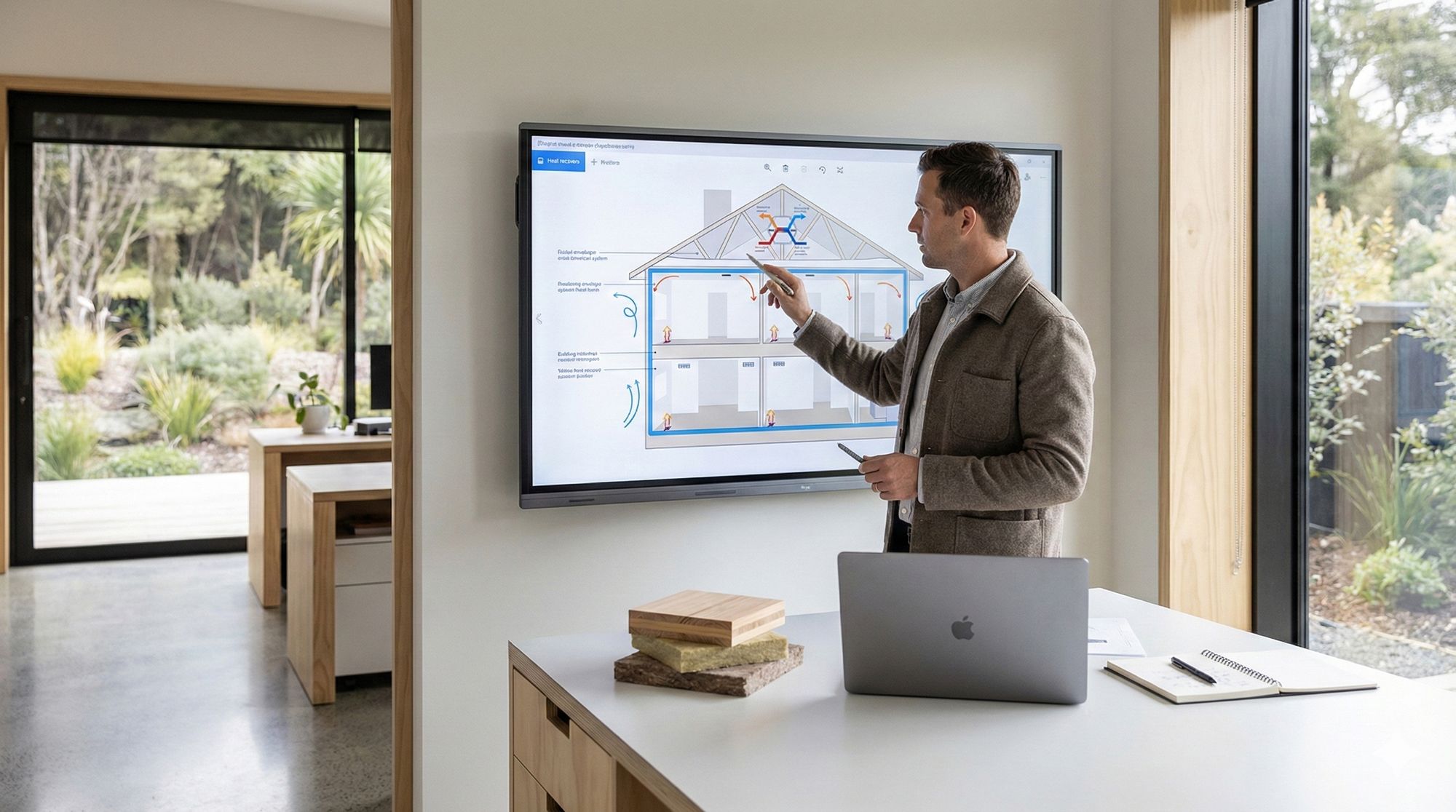
How Hygrothermal Modelling Helps Designers Make Better Decisions
Hygrothermal modelling predicts how heat and moisture travel through materials over time. It lets you test real climate data, construction moisture, indoor humidity patterns, and material properties before the building is even started.
This approach removes guesswork and reveals whether a proposed wall, roof, or floor can dry at the rate required to stay safe. It also highlights where design improvements may be needed, such as better vapour control, ventilation pathways, or membrane selection.
Turning Research Into Long Term Building Performance
The research is clear. Moisture control needs more than hope and more than a code check. Condensation analysis allows you to design with confidence, reduce risk, and protect your clients’ investment.
For a deeper dive into the science behind these insights, read Denise Martin’s full article at beoscience.com. Combine those findings with the Energytight™ approach and you can deliver airtight, well ventilated homes that stay healthy and durable in New Zealand’s climate.
Feel the Difference
Feel the Difference
Benefits of an Airtight, Ventilated Home

Super energy efficiency
Experience dramatic savings on home heating & cooling

Healthy indoor air quality
Seal out mould, pollutants & allergens for a healthier indoor environment

Diminish outside noise
Up to 40% reduction in outside noise from traffic & neighbours

Durable structure
Reduce conditions that lead to damp cavities, mould & timber rot

A more comfortable home
Feel warmer in the winter, cooler in the summer

Defend against insects & pests
Seal gaps & holes to create the first line of defense against insects & pests
Build Tight. Ventilate Right. Live Better.
With AeroBarrier and the Energytight™ Solution, you’re not just sealing a house, you’re transforming how it performs.

Energy-efficient homes sell faster—and for more
Across global markets, buyers are paying a premium for proven performance. In Australia, a 2025 Domain Property report found homes advertised with features like “energy-efficient” sold for an average of $118,000 (14.5%) more. In the U.S., ENERGY STAR–certified homes consistently sell faster and achieve 2%–9% higher prices. Similar patterns are seen in Canada, the UK, and Germany. Closer to home, EECA research shows 70% of New Zealand homeowners are worried about energy use and 81% expect energy prices to rise. For today’s buyers, certification and measured results matter—they want proof, not promises.
Homes with verified energy-efficient features consistently sell faster and at higher pricesacross major markets, with buyers increasingly motivated by rising energy costs and a demand for certified performance.

The Aero Energytight™ Solution
The Aero Energytight™ approach combines all the essentials of an energy efficient, comfortable home. It is airtight, using AeroBarrier technology to seal leaks and lock in energy efficiency. It is ventilated, with continuous mechanical ventilation to ensure clean, healthy indoor air. And it is certified, with tested airtightness results that provide proof of performance, not just promises.
An Energytight home means more than lower energy bills, it’s a home that feels warmer in winter, cooler in summer, and healthier all year round. With airtight construction and proper ventilation, you’ll enjoy consistent comfort, cleaner air, and a house that holds its value over time. Around the world, buyers are already paying more for this level of performance. When planning your next build, ask your builder for an Energytight home, because comfort and long-term value should come built in.
Some images on this page have been AI-generated by Gemini
What Is the Energytight™ Solution?
Energytight™ is the new standard by Aero that defines the benchmark in energy-efficient, high-performance homes. Powered by AeroBarrier®, the Energytight™ solution seals invisible air leaks, delivering precise, measurable airtightness.


Our CPD presentation explains how airtightness supports building performance. It includes technical and background information and case studies any New Zealand residential architect will find useful.