
Case Study:
Using the AeroBarrier retrofit solution, Trust House upgraded two 1950s ex-state houses in Masterton to an airtightness standard that’s comparable to high-end new builds.
Choosing airtightness improvements over insulation upgrades in these specific cases shows how measurable performance gains can be achieved quickly, cost-effectively, and with minimal disruption to tenants.
How Trust House used airtightness to improve community housing
Minimising the cost of upgrading older houses
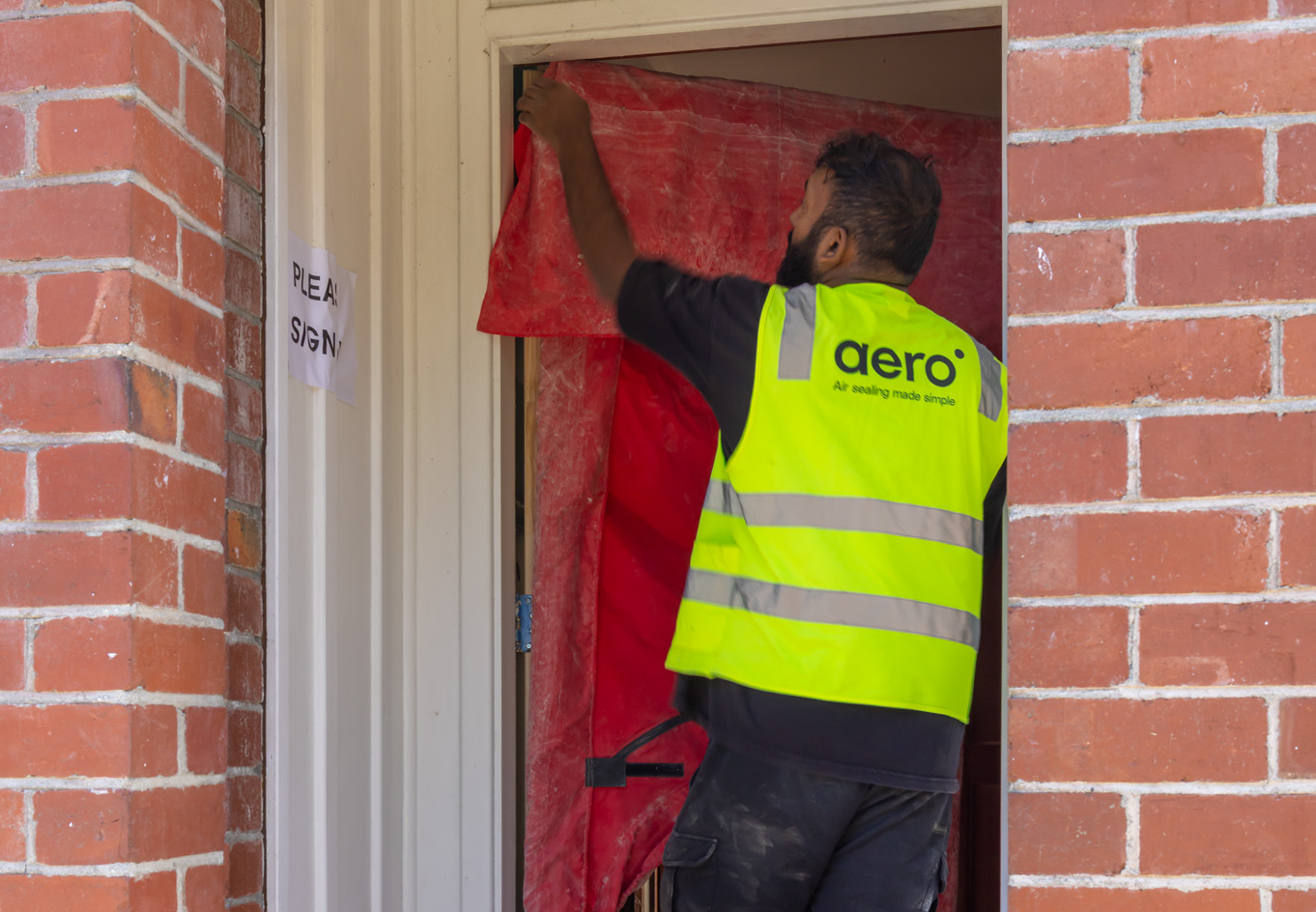
Many older community houses in New Zealand are draughty and hard to heat, and the two buildings that were selected for this project were no different. Trust House had initially considered retrofitting blown-in wall insulation alongside window sealing and mechanical ventilation. However, this approach would have required drilling multiple holes into walls, and then repairing and redecorating internal surfaces.
“As a community housing provider, we assess each property individually to determine which interventions will deliver the best value and outcomes.” says Kenny Gilbertson, General Manager Building and Infrastructure at Trust House. “These houses didn’t need full internal refurbishment or redecoration, so we decided to focus on improving airtightness over insulation in this particular case.”
AeroBarrier could improve thermal performance without the remediation work associated with traditional insulation retrofits. “Brick houses generally have deeper cavities that insulation has to fill as well, which makes AeroBarrier more cost-effective in this scenario.”
Why airtightness matters in retrofit projects
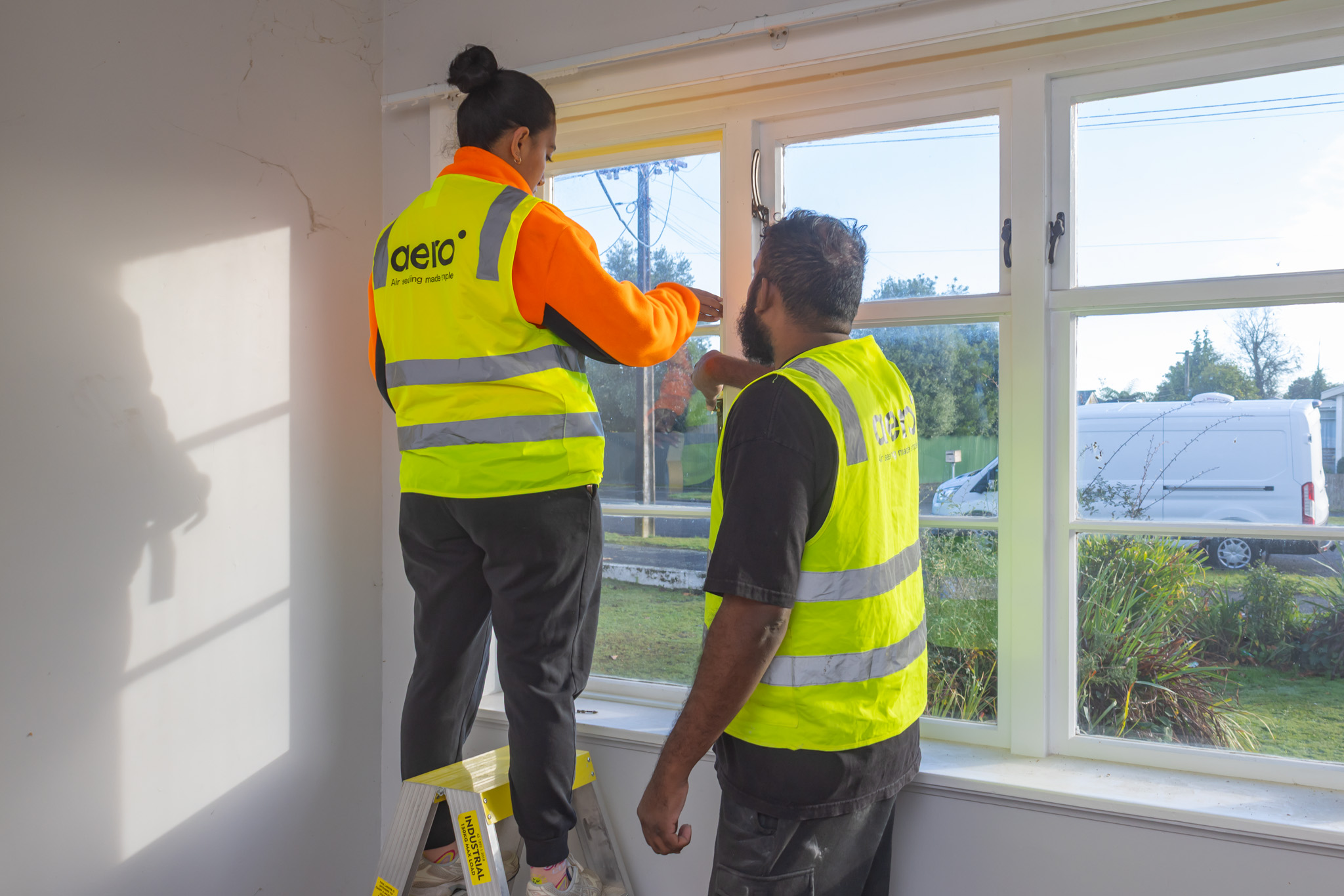
“Airtightness is important whether it’s for a retrofit or a new build,” says Kenny. While an ideal upgrade would include both improved insulation and airtightness, for this project there were time constraints at play and insulation was impractical to retrofit.
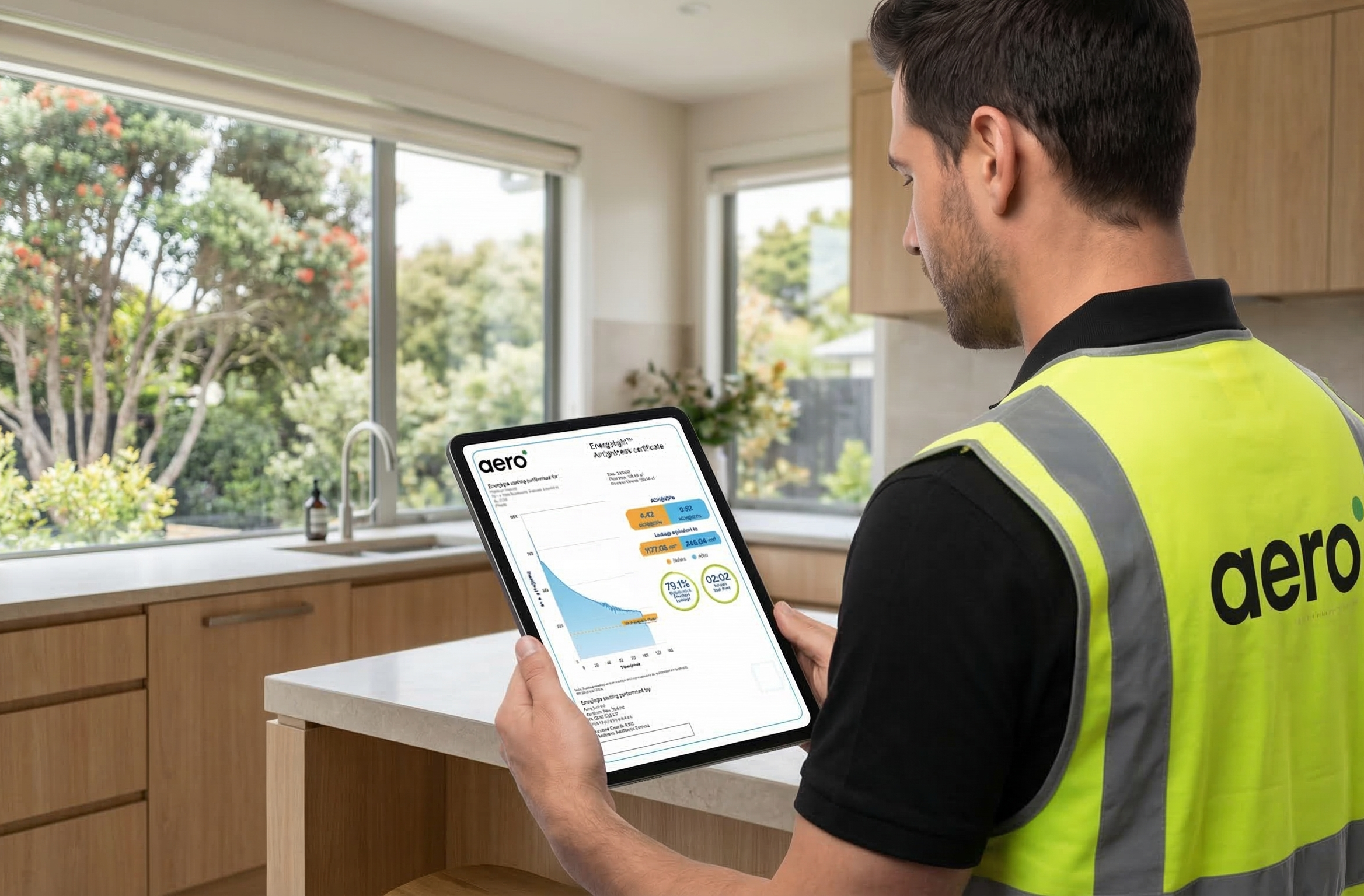
Airtight retrofit homes perform better thermally by reducing uncontrolled air leakage. When warm air escapes through uncontrolled gaps in the building envelope, heating systems must work harder to maintain indoor temperatures. Improving airtightness helps reduce these heat losses and allows ventilation systems to operate more effectively. One of the Trust House homes showed a reduction in envelope leakage of 85% after AeroBarrier was applied, with an equivalent leakage area that had shrunk from approximately 1,203 cm2 to just 183 cm2.
Airtight homes rely on mechanical ventilation to provide a continuous supply of fresh air while removing moisture, pollutants and other indoor contaminants. “Where appropriate, Trust House incorporates improved ventilation systems as part of its housing upgrade programme because it provides a healthier living environment,” says Kenny. “And windows are checked to ensure they meet Healthy Homes Standards. So, using AeroBarrier in addition makes sense.”
Retrofitting AeroBarrier is simple and fast
The project incorporated three complementary upgrades: AeroBarrier airtightness sealing, window draught-proofing and mechanical ventilation. Together, these measures create warmer and healthier homes that are easier and more cost-effective to heat.
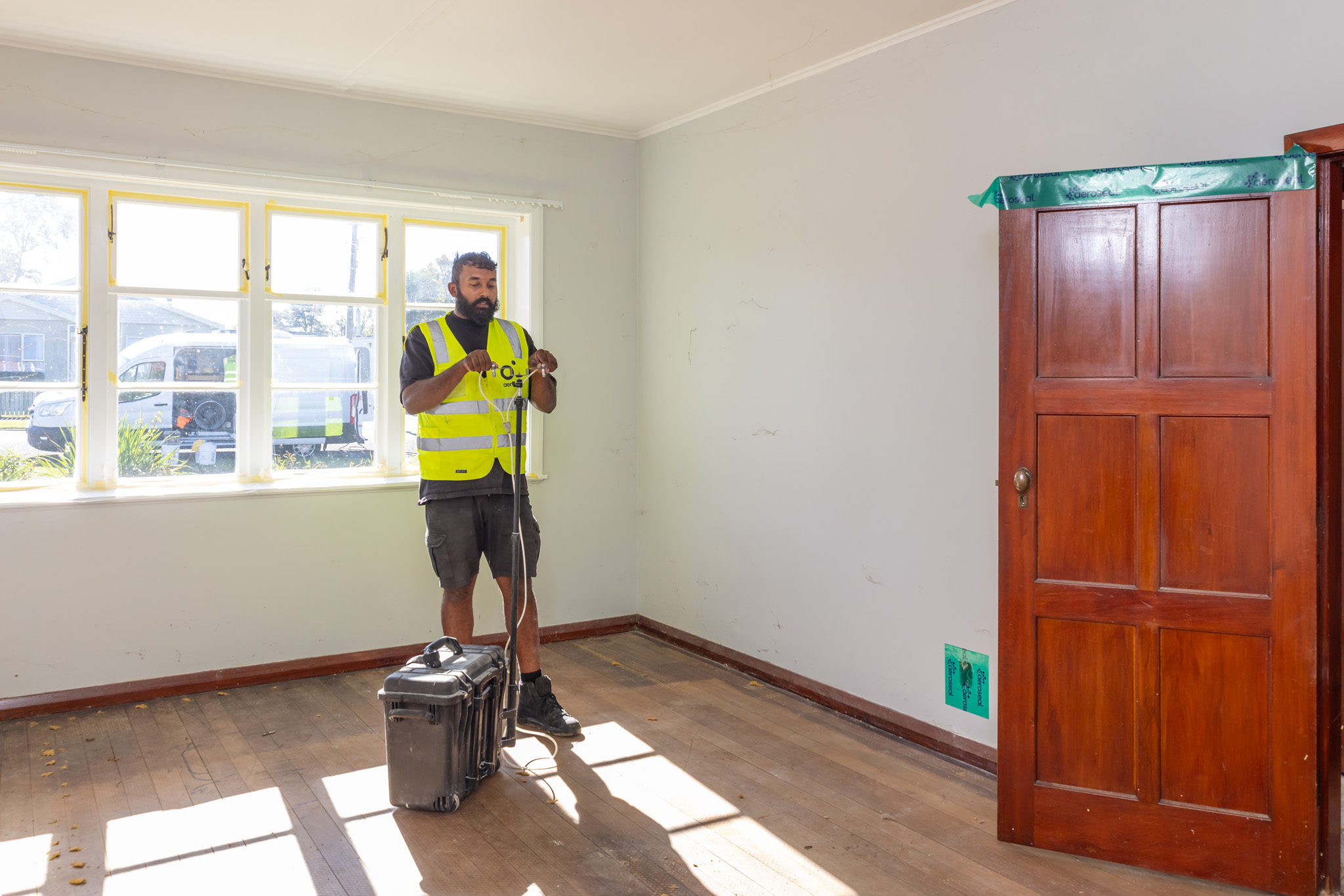
Retrofitting AeroBarrier was a simple process that fitted well into the renovation schedule, according to Kenny. “Both units were completed within one day,” he says. “With tight tenant timeframes and the condition of these homes, it’s a good tool to improve comfort and performance without major remediation work.”
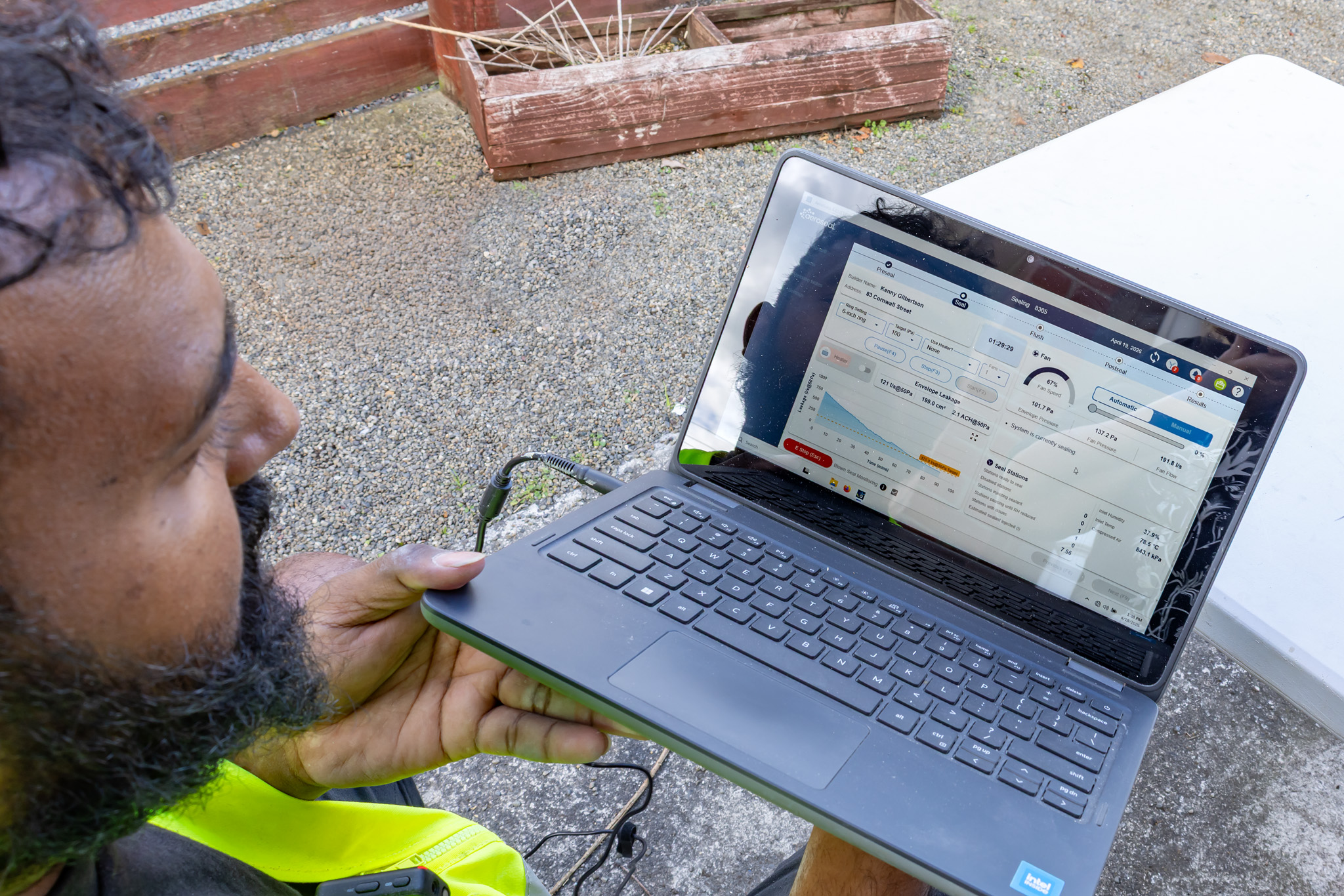
The technology works by temporarily pressurising the house and distributing an aerosolised sealant. The sealant follows the path of leaking air and fills gaps and cracks that are difficult or impossible to locate manually. In this project, the flooring was lifted during the renovation works so AeroBarrier was able to seal flooring gaps as well, providing further airtightness improvements.
Exceeding airtightness performance targets
Both homes were highly leaky by modern standards with an expected rating of over 20 ACH50 without any masking or sealing. In comparison, an average new home may achieve between 9 and 6 ACH50, while high-performance homes target below 3 ACH50.
AeroBarrier delivered substantially greater improvements. The Trust House properties improved to 2.6 ACH50 and 1.9 ACH50 respectively, with intentional openings temporarily sealed (reflecting the airtightness of the building envelope). Final operational airtightness was established as 3.4 ACH50 for one of the homes.
ACH50 indicates how many times the total volume of air inside a building is replaced in one hour under a pressure difference of 50 Pascals. Trust House had initially aimed to reduce airtightness levels below 8 ACH50, however, results far exceeded this and place the properties in the high-performance category when it comes to airtightness. In practical terms, the improvements transformed the homes from buildings with high air leakage rates into homes with airtightness levels approaching those associated with premium new builds. These improvements are expected to support improved thermal performance and occupant comfort.
“Both units were completed within one day. With tight tenant timeframes and the condition of these homes, it’s a good tool to improve comfort and performance without major remediation work.”
The airtightness performance scale
Better — 5 ACH50: This is the benchmark set by the International Code Council (IECC), a standard for energy-efficient design and construction used widely across the US and internationally. A home at 5 ACH50 or below is considered well-performing and energy-efficient.
Best — 3 ACH50 or lower: Most High Performance Home standards require a minimum of 3 ACH50 or lower. Passive House sets the strictest benchmark — a maximum of 0.6 ACH50.
Airtightness and ventilation are the fundamental platform systems for energy-efficient, healthy, comfortable homes.
ACH50 is an internationally recognised measure of how airtight a home is. The lower the number, the better the performance.
Typical existing NZ homes: Most existing New Zealand houses are very leaky — making them difficult to keep warm and healthy for the people living in them.
Typical new NZ homes: Most new houses built in NZ are still far leakier than international standards. Comparable countries set a minimum airtightness requirement in their building codes, typically between 3 and 5 ACH50
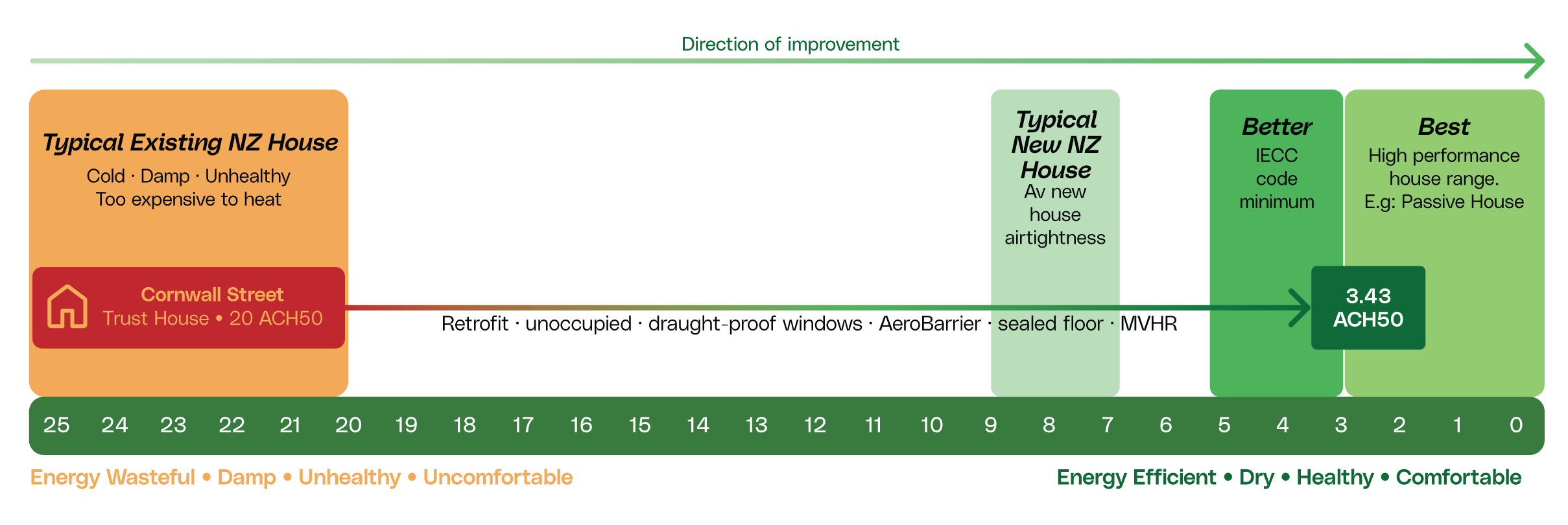
Note: Every home is different. With a full Energytight™ Retrofit, we aim to bring your home up to the standard of a new home — or better. Results depend on factors such as your home’s existing condition and the combination of Energytight™ options you choose.

Greater comfort and lower energy costs for tenants
While airtightness metrics provide valuable technical validation, the real benefit is the impact on occupants. “We’re happy with the airtightness outcomes and the improved thermal performance. These houses are expected to be cheaper to heat and more comfortable to live in,” says Kenny.
According to Aero Solutions Operations Manager Dave Ross, airtightness and ventilation work together to create warmer and healthier homes: “When you stop uncontrolled air leakage and combine that with effective mechanical ventilation, you get better temperature stability, better moisture management, and a healthier indoor environment.”
Measurable benefits for community housing providers
While insulation remains an important part of building performance, Trust House found that in this scenario, improving airtightness alone delivered significant measurable benefits without the need for extensive wall remediation and redecoration.
“AeroBarrier is another tool that we can use,” says Kenny. “It provides a quick, measurable improvement in airtightness and can be the right retrofit solution in the right property.” He adds: “If we decide in the future that our new builds could also perform better from improved air-tightness, then AeroBarrier is something we could look at.”For housing providers seeking cost-effective ways to improve tenant wellbeing and enhance asset performance, the Trust House project highlights the growing role that airtightness can play in New Zealand’s housing retrofit market.
Find out more about how AeroBarrier and the EnergyTight™ retrofit
solution can help provide warm and dry homes in New Zealand. Read about how AeroBarrier was retrofitted into a new Waikato housing development to achieve the desired Homestar rating.
Want to achieve results like this in your next project?